Rcsi

Tag: rcsi

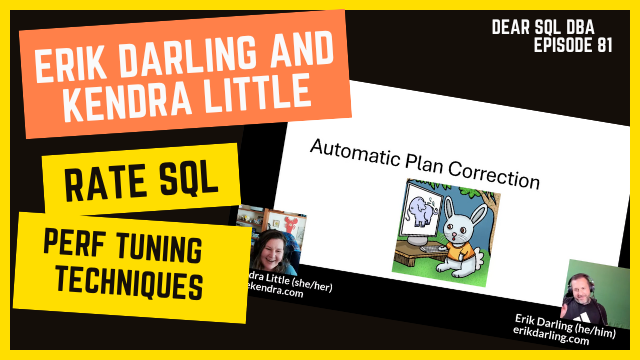
Erik Darling and Kendra Little Rate SQL Server Perf Tuning Techniques

Erik Darling and Kendra Little Rate SQL Server Perf Tuning Techniques

Erik Darling joins Kendra Little to rate different SQL Server Performance Tuning Techniques in episode 81 of the Dear SQL DBA podcast. We share our opinions of… (deep breath)

Recompile hints, Query Store hints and plan forcing, CTEs, Resource Governor, the legacy cardinality estimator, Table Variables, Automatic Plan Correction, Batch Mode, index rebuilds, Hekaton, NOLOCK, page compression, partitioning, filtered indexes, columnstore, join hints, PSPO, indexed hints, indexed views, optimize for unknown, RCSI, adding more memory, restarting the damn thing, scalar UDFs, and Persisted Memory Grant Feedback.
Continue reading

Lost Updates Under Read Committed Snapshot Isolation (RCSI)

Lost Updates Under Read Committed Snapshot Isolation (RCSI)

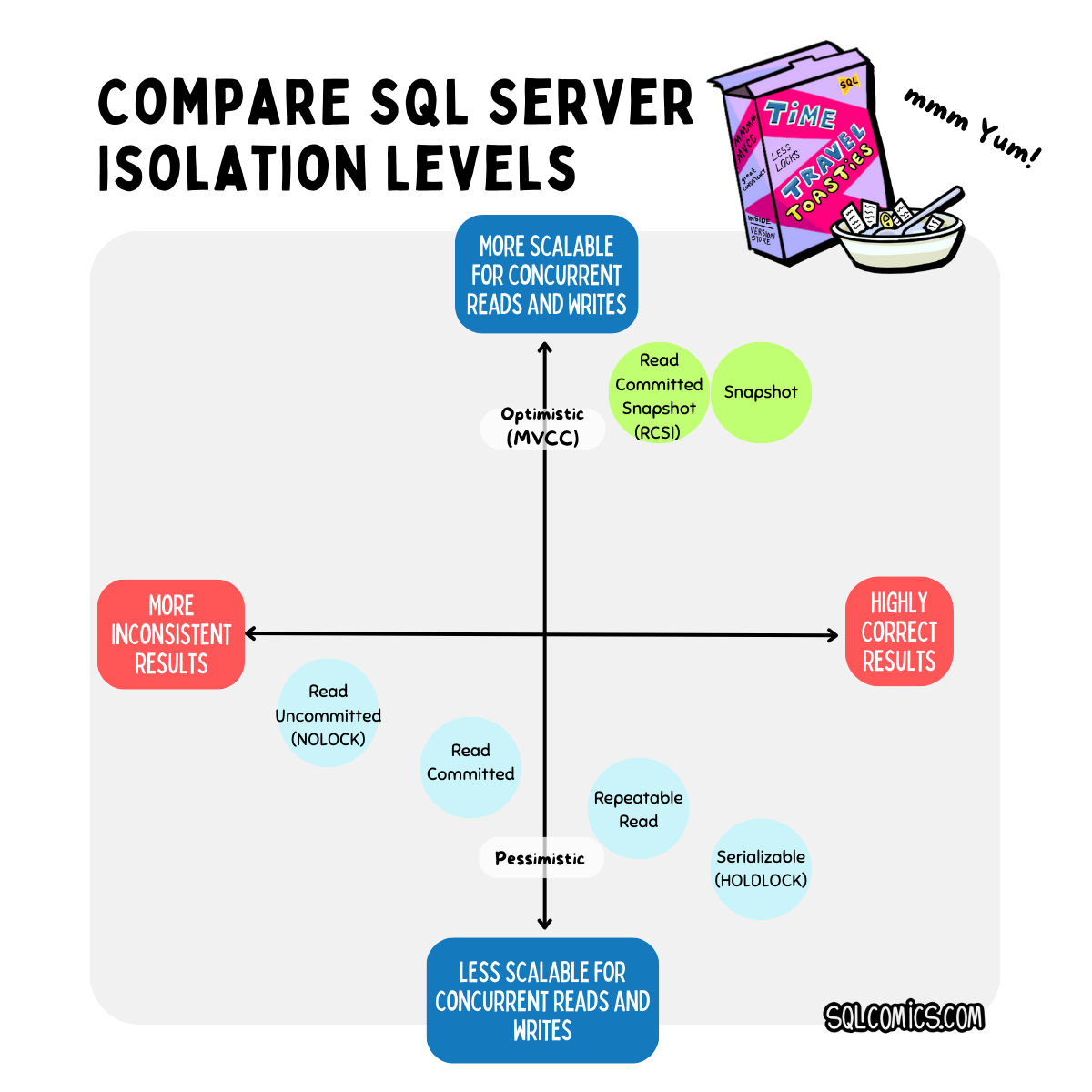
I shared an image on social media this week that describes how I feel about isolation levels in SQL Server (and its various flavors): the more concurrent sessions you have in a database reading and writing data at the same time, the more attractive it is to use version-based optimistic locking for scalability reasons.

There are two isolation levels in SQL Server that use optimistic locking for disk-based tables:

  1. Read Committed Snapshot Isolation (RCSI), which changes the implementation of the default Read Committed Isolation level and enables statement-based consistency.
  2. Snapshot Isolation, which provides high consistency for transactions (which often contain multiple statements). Snapshot Isolation also provides support for identifying update conflicts.

Many folks get pretty nervous about RCSI when they learn that certain timing effects can happen with data modifications that don’t happen under Read Committed. The irony is that RCSI does solve many OTHER timing risks in Read Committed, and overall is more consistent, so sticking with the pessimistic implementation of Read Committed is not a great solution, either.

Continue reading

Row Width Impact on Version Store Usage under Snapshot Isolation

Row Width Impact on Version Store Usage under Snapshot Isolation

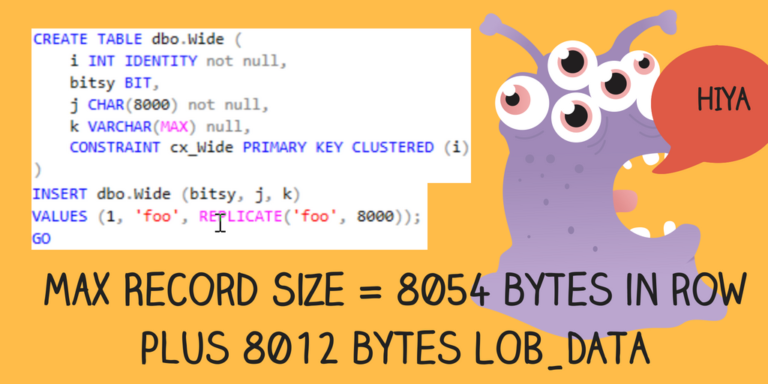
A question came up in my webcast today on the topic of Snapshot and Read Committed Snapshot Isolation - what impact will enabling these have on my SQL Server instance?

Continue reading

How to Choose Between RCSI and Snapshot Isolation Levels

How to Choose Between RCSI and Snapshot Isolation Levels

on February 18, 2016

SQL Server offers two flavors of optimistic locking for traditional disk-based tables: Read Committed Snapshot Isolation (RCSI), and Snapshot Isolation. They are each great tools to reduce blocking and make applications faster, particularly in databases that have lots of tiny reads and writes that need to be quick, or mixed-use patterns (lots of little reads and writes + larger reporting queries).

Both isolation levels are available in SQL Server Standard Edition and Web Edition as well as Enterprise. That’s right, they’re cheap and easy. Each of them are controlled by database level settings, and default to disabled for new user databases when you install SQL Server and leave the default settings on the model database.

When should you pick one or the other? And when might you enable both?

Continue reading