EstimateRowsWithoutRowGoal helps you see: is it a statistics problem?
SQL Server Management Studio version 17.5 adds a welcome feature for execution plans: a new visual attribute named EstimateRowsWithoutRowGoal.
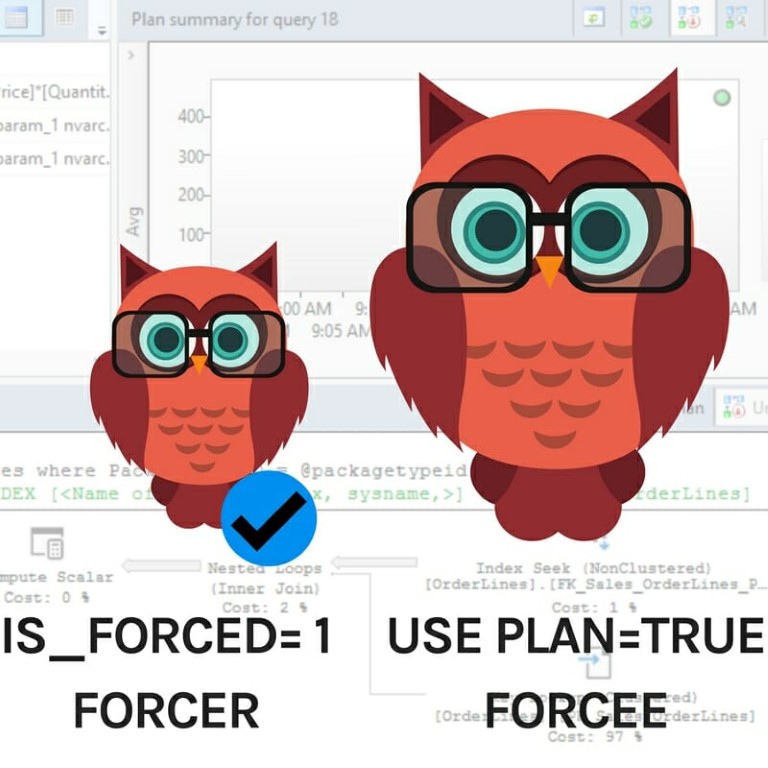
Identifying that a query plan has been bossed around in Query Store can be a bit tricky, because it can appear in different ways.
Nope.
At least, not right now.
A few folks have asked: will auto-tuning and adaptive query plans mean the end of performance tuning jobs for SQL Server? In this week’s episode, I talk about why I’m excited about those features rather than afraid of them.
Digging into this problem, I share the #1 mindset problem I had as a DBA, why this mindset is so common among database professionals, and a daily habit that can change your approach to new technology.
Sometimes you know a query is out there, but it’s hard to find the exact query.
SQL Server stores query execution plans in cache, but it can be difficult to query the XML it stores. And there’s always a chance that the query plan won’t be there, due to memory pressure, recompile hints, or the plan cache being cleared by setting changes or other administrative actions.
A couple of questions on SQL Server 2016’s new Query Store feature came up in my recent pre-conference session on index tuning in SQL Server. I wasn’t 100% sure of the answer offhand, so I promised to follow up in a blog post.
I recently mapped out my thought process for how I approach a new instance of SQL Server when it comes to index tuning.
Copyright (c) 2025, Catalyze SQL, LLC; all rights reserved. Opinions expressed on this site are solely those of Kendra Little of Catalyze SQL, LLC. Content policy: Short excerpts of blog posts (3 sentences) may be republished, but longer excerpts and artwork cannot be shared without explicit permission.