Blogs

You Will Not Find Long Compilers Who Time Out in Query Store

You Will Not Find Long Compilers Who Time Out in Query Store

Last November, a puzzle was really bothering me. Some queries from an application were timing out frequently after running for 30 seconds, but they were halfway invisible in the SQL Server.

Continue reading

How to Start an XEvents Trace on a Read Scale-Out Azure SQL Managed Instance

How to Start an XEvents Trace on a Read Scale-Out Azure SQL Managed Instance

It took me more than half hour to figure out how to start an XEvents trace on a read-scale out instance of Azure SQL Managed Instance. It’s hard to monitor read scale-out instances, so tracing is desirable! I started with a simple trace of sql_statement_completed. Hopefully this saves other folks some time.

Continue reading

Should You Use SQL Server Readable Secondaries If Queries Can Fail Repeatedly at Any Time?

Should You Use SQL Server Readable Secondaries If Queries Can Fail Repeatedly at Any Time?

If you use readable secondaries in Availability Groups or Read-Scale out instances in Azure SQL Managed Instance, you may have queries fail repeatedly if there is a glitch and statistics are not successfully ‘refreshed’ on the secondary replica. Those queries may keep failing until you manually intervene.

It’s unclear if Microsoft will ever fix this. There is a well established support deflection article which documents the issue and provides ‘workarounds’.

Continue reading

Ugly Bug: SQL Server Online Index Rebuild Sometimes Happens Offline Without Warning

Ugly Bug: SQL Server Online Index Rebuild Sometimes Happens Offline Without Warning

🔥 UPDATE: This issue has now been documented. A note has been added to the Perform index operations online documentation page, stating: "Index rebuild commands might hold exclusive locks on clustered indexes after a large object column is dropped from a table, even when performed online."

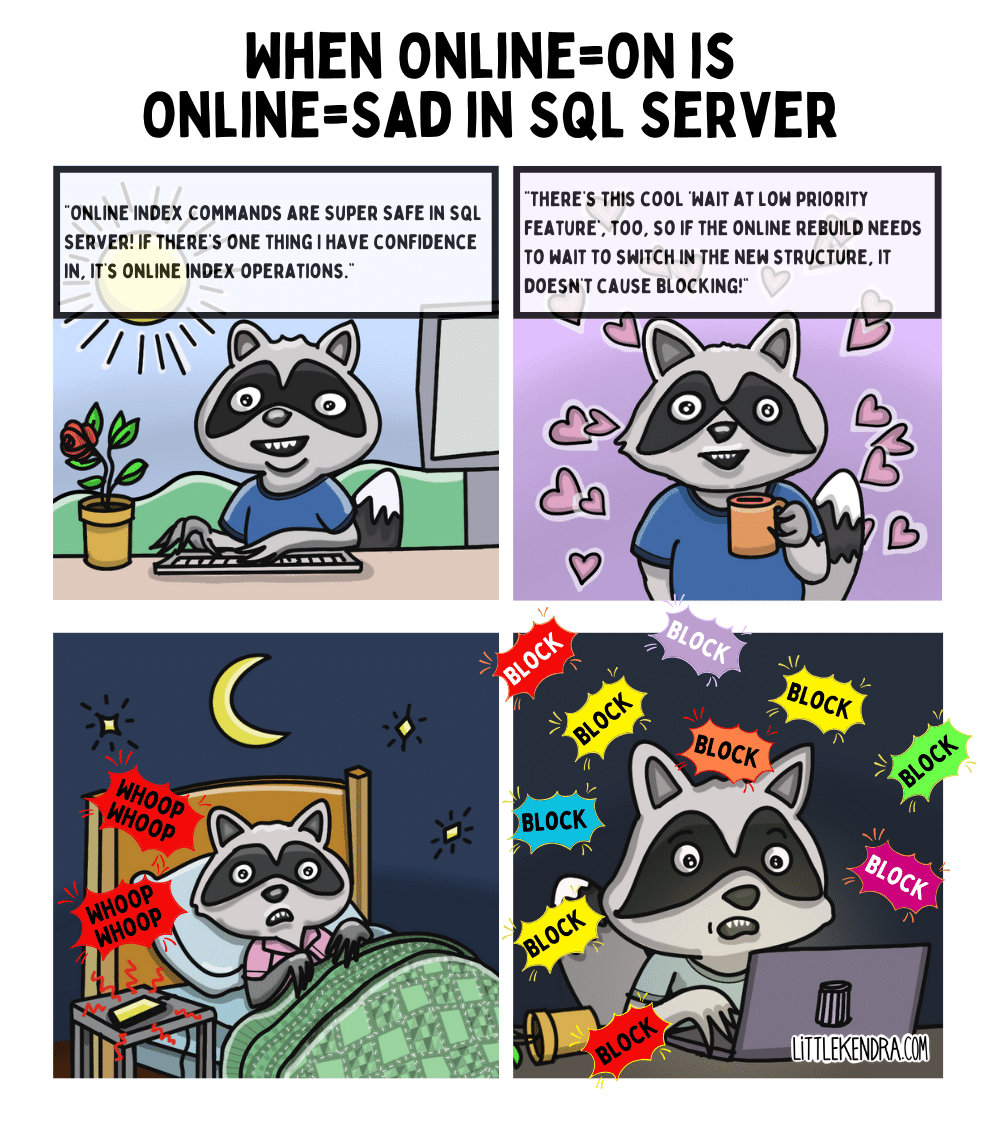
I found a nasty bug in SQL Server and Azure SQL Managed Instance recently: sometimes an ‘online’ index rebuild of a disk-based rowstore clustered index (basically a normal, everyday table) isn’t actually ‘online". In fact, it’s very OFFLINE, and it blocks both read and write queries against the table for long periods.

If you manage to make it through a rebuild successfully, the problem goes away for future rebuilds of that clustered index – likely leaving you bruised and bewildered.

Continue reading

Is the Azure SQL Managed Instance Business Critical Service Tier Worth the Cost?

Is the Azure SQL Managed Instance Business Critical Service Tier Worth the Cost?

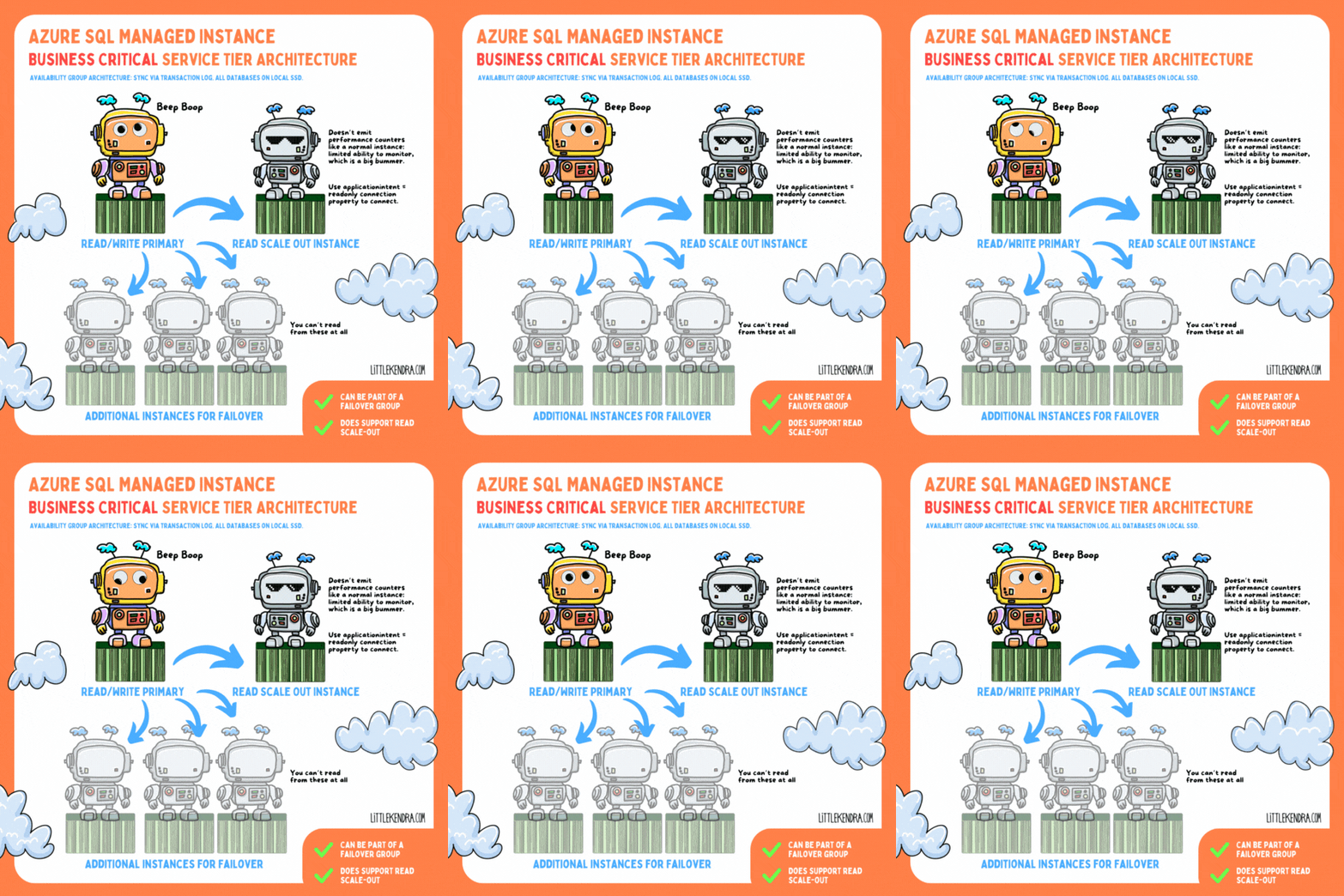
The Business Critical service tier in Azure SQL Managed Instance is a lot more expensive than General Purpose. For the extra money, you get a different architecture.

Is it worth the extra cost? Spoiler: your mileage will vary, but probably not. Let’s talk about why.

Continue reading

Azure SQL Managed Instance General Purpose Architecture and Performance/Cost Tradeoffs

Azure SQL Managed Instance General Purpose Architecture and Performance/Cost Tradeoffs

By Kendra Little on January 22, 2024 • 5 min read

Category: azure-sql , sql-server

🔥 UPDATE: Microsoft has announced the general availability of the Next-gen General Purpose service tier for Azure SQL Managed Instance, which includes improvements to I/O latency, IOPS, and transaction log throughput. This post describes the original General Purpose blob storage. You don't want that.

Whether or not you use Azure SQL Managed Instance, you will likely be asked for an opinion on it eventually if you’re a SQL Server person.

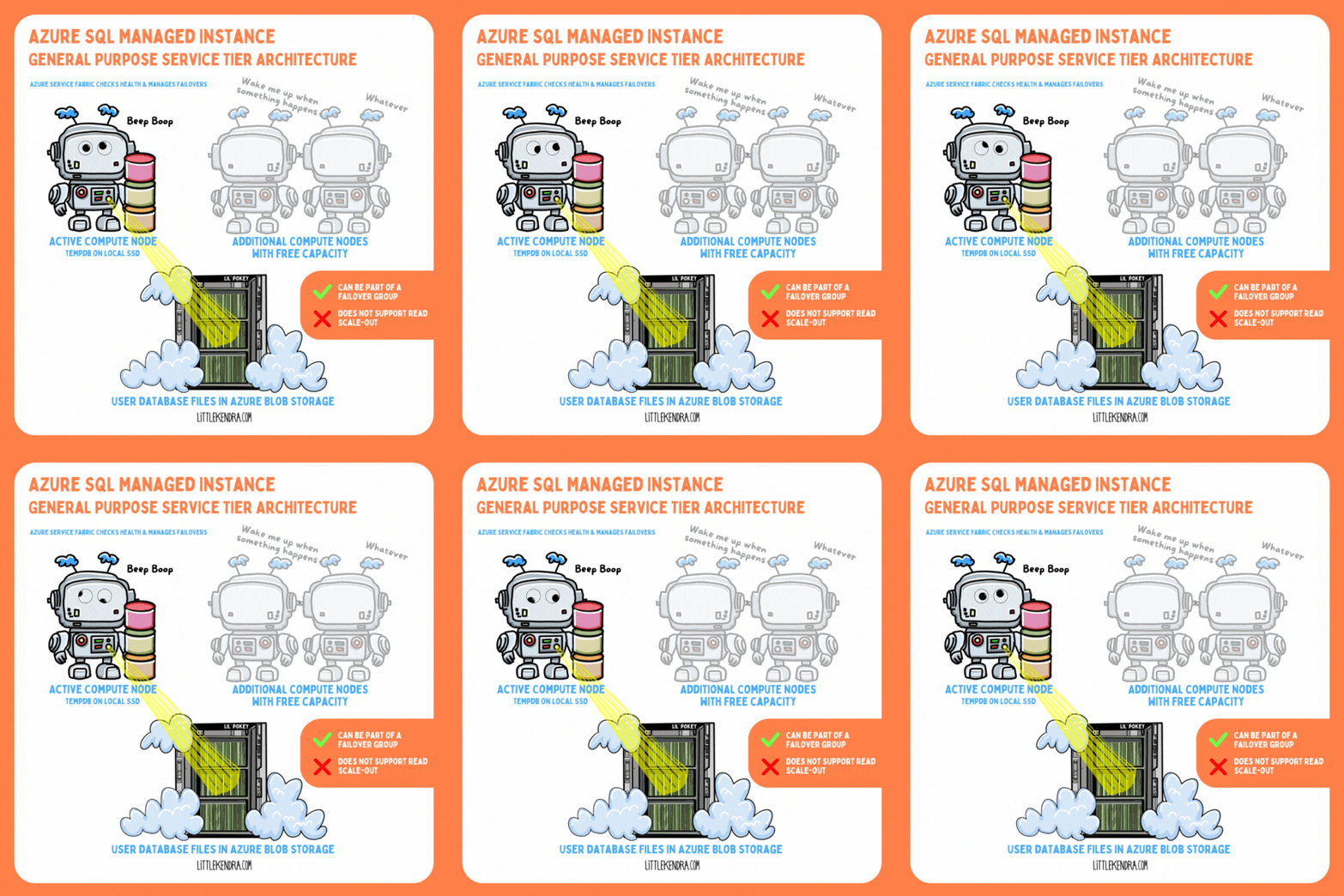
While the architecture is documented, it can be a bit of a long read and some of the gotchas are spread out over different pages – so I’m drawing up the architecture of each service tier along with notable implications for the design on performance and cost. Here’s the scoop on General Purpose.

Continue reading

Automatic Plan Correction Could Be a Great Auto Tuning Feature for SQL Server: Here Is What It Needs

Automatic Plan Correction Could Be a Great Auto Tuning Feature for SQL Server: Here Is What It Needs

🔥 UPDATE: The sys.sp_configure_automatic_tuning stored procedure is now documented and supported by Microsoft. Thanks to the SQL Server Product team for this improvement.

I’ve written a bit about SQL Server’s Automatic Plan Correction feature before– I have an hour long free course with demos on Automatic Plan Correction here on the site.

Today I’m updating that course with a note: after using Automatic Plan Correction in anger for a good amount of time, I do not recommend enabling the feature. I’ve had it cause too many performance problems, and there are not a ton of options for an administrator when it’s causing those problems.

Meanwhile, becoming reliant on the feature for the places where it does help makes it difficult to disable the feature. You end up stuck with a very weird set of problems that are oddly similar to the problems the feature was designed to solve.

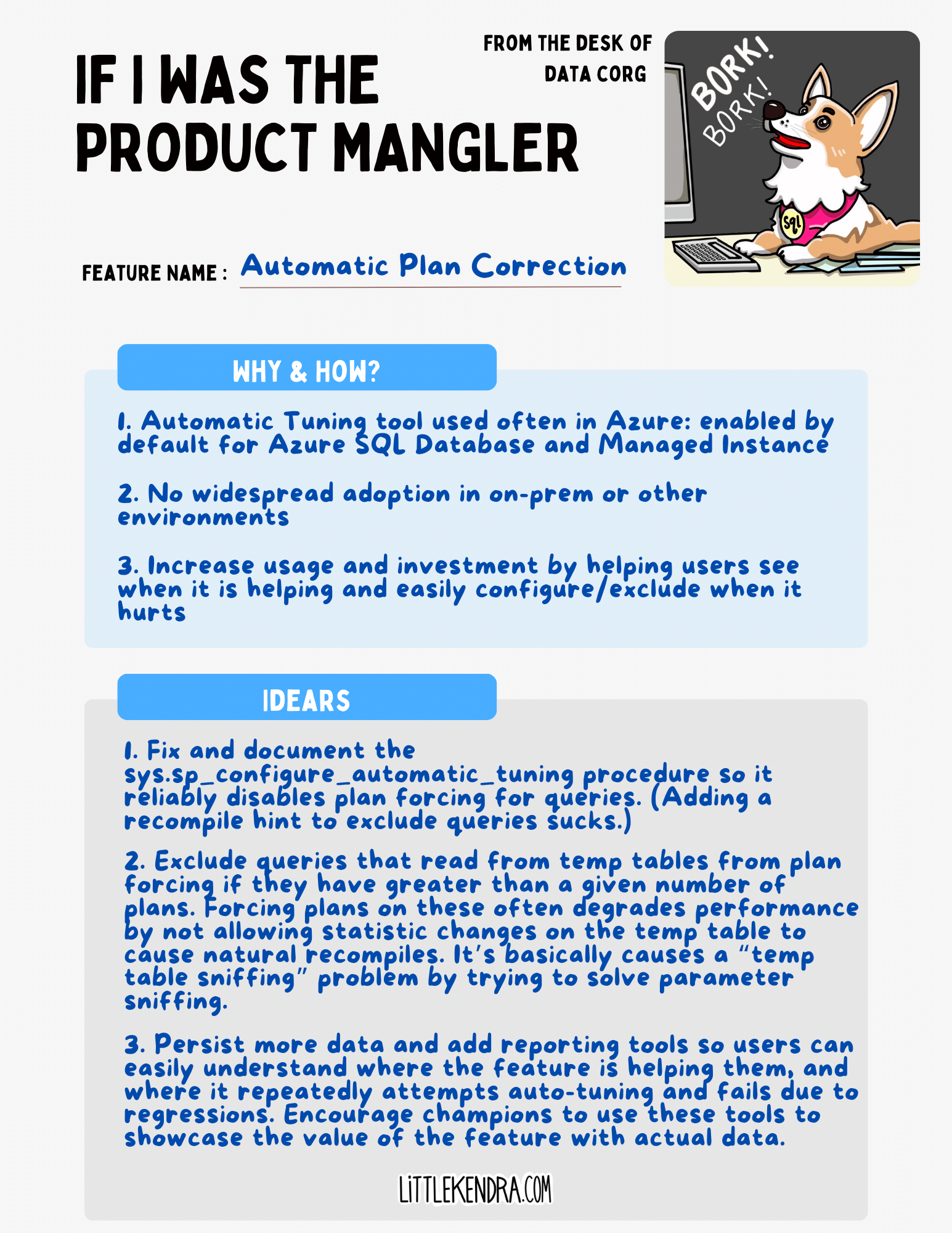
Further investment in the feature could solve these problems and make this a great tool for customers. Here’s a run down of what Automatic Plan Correction needs from a user who has suffered from it.

Continue reading