100 Things I Hate About Views: Undeclared Data Types in Columns
Views let you do dumb things by accident in SQL Server. Then they make you have to think way too hard to fix them.
Read MoreBy Kendra Little on • 3 min read
Next week the Professional Association for SQL Server will be providing 24 hours of free, online training on SQL Server.
Come get your learn on.
My talk will be next Tuesday, March 15 at 10 AM Pacific / 1 PM Eastern / 5 PM GMT.
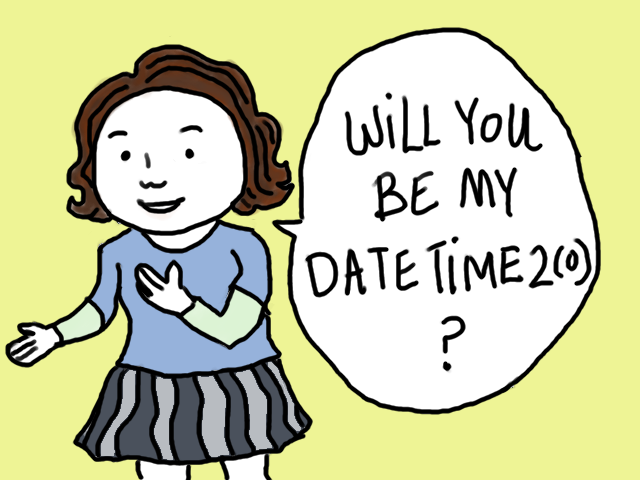
It is Session 06: No More Bad Dates: Using Temporal Data Wisely.
Register for sessions here. There are many great sessions on Tuesday and Wednesday– pick what fits you, and you’ll receive a calendar invite with a link to the LiveMeeting for each one. (Timezones are listed in GMT, which can be confusing for the people of North America, particularly since Daylight Savings is coming to some of us this weekend. The calendar invites will help, I promise!)
My session is on best practices for choosing date and time types in schema, with lots of tips for writing queries working with dates and times.
I love the talk I’m giving on dates and times because I get to cut across different areas– I get to talk about data types, choices in schema design, and how to write T-SQL. I also get to talk about little-known features of SQL Server, and give lots of tips and tricks along the way.
Working on this presentation has been a really fun journey. It began when I noticed in Books Online that the datetime data type is officially no longer recommended for new development-- and this has been the case for three years!
This is rarely discussed and, except for DATE, the new types are rarely used. So I began to ask the question: is it ever worth converting existing schemas to the new types? Is there any reason to still use older types, such as SMALLDATETIME? What do you sacrifice if you don’t use the new DATETIME2 type, and are there any issues if you start using it? What are the most common, but least known problems when working with dates?
It’s fun to give practical, useful advice. I recently gave this talk at SQL Saturday #65 in Vancouver, BC, and had a great audience. I asked them to share with me whether they learned anything new, or were surprised by what I covered.
I heard back from more than ten people in the audience in person or by email, and all but one said they learned something new. Everyone had worked with date and time types before. They were also great at letting me know which topics could use a little more detail and clarity.
Most people commented that they were surprised by the talk, and that things are trickier than they’d understood.



Copyright (c) 2025, Catalyze SQL, LLC; all rights reserved. Opinions expressed on this site are solely those of Kendra Little of Catalyze SQL, LLC. Content policy: Short excerpts of blog posts (3 sentences) may be republished, but longer excerpts and artwork cannot be shared without explicit permission.